Careful craftsmanship. Every layer, every line.
Call info@procrafttileinstallation.com

Residential Tile Installation

Considered preparation. Careful layout. A finish that fits the space.

Kitchen view with a dark island, white veined countertop, white cabinetry, and light large-format floor tile

A thoughtful approach to residential tile installation

Residential tile installation is more than setting tile in a straight line. A durable result starts with understanding how each room is used, how the building moves, and how water will interact with the assembly. ProCraft Tile Installation helps homeowners plan and install tile for floors, walls, kitchens, bathrooms, showers, laundry areas, entries, and other living spaces with attention to layout, substrate preparation, setting materials, grout, and transitions.

We approach each project as a complete tile system. That means checking the existing surface before discussing a pattern, selecting an installation method that suits the tile and exposure, and allowing for movement where large surfaces meet changes in plane or building elements. The goal is a clean, practical installation that fits the room and is easier to maintain over time—not a one-size-fits-all application.

Whether you are replacing worn flooring, updating a backsplash, or finishing a bathroom, residential tile work benefits from careful decisions before the first tile is set. We can help you think through tile size, visual balance, grout joints, edge details, waterproofing needs, and the conditions that matter specifically in your home.

What our clients say

“They checked the floor before we even talked about tile and found a soft spot by the tub nobody else had noticed. The new floor is flat, the grout lines are straight, and they cleaned up at the end of every day.”

Melissa R.Bathroom floor

“We chose a herringbone backsplash and I was nervous about the corners and outlets. Every cut lines up. The quote was clear, they showed up when they said they would, and there were no surprises on the invoice.”

David K.Kitchen backsplash

“The shower took a couple of days longer than I expected because they let the waterproofing cure properly. I'm glad they didn't rush it. The niche lines up perfectly with the tile.”

Priya S.Shower remodel

Our process for residential tile installation

Evaluate the room and existing surface

We begin by reviewing the room, intended use, tile selection, adjacent finishes, and the condition of the surface underneath. Tile needs a sound, suitably flat, clean substrate; loose material, contamination, excessive deflection, or problematic height changes can affect the finished installation. Where appropriate, we identify preparation or repair needs before layout and setting work begin.

Plan the layout and transitions

A good layout accounts for room sightlines, centered or balanced cuts, grout joint alignment, cabinets, plumbing fixtures, doorways, and transitions to nearby flooring. We discuss orientation and pattern direction before installation, including how large-format tile may require tighter flatness control and how corners, niches, thresholds, and exposed edges will be finished.

Prepare the tile substrate

Preparation may include cleaning, patching, flattening, removing unsuitable material, or installing an appropriate underlayment or backer system. The correct approach depends on the substrate and the room. A tile surface should not be used to hide structural movement or a substrate that is not ready to receive the installation.

Install with compatible setting materials

We use setting materials selected for the tile, substrate, size, and exposure. Coverage and contact matter, particularly under larger tiles and in areas subject to moisture or heavier use. In wet areas, the assembly may require a compatible waterproofing method; tile and grout themselves are not a substitute for a waterproof system.

Grout, detail, and review the finished work

After the setting material has properly cured, grout joints, perimeter conditions, movement joints, trim, and transitions are completed with attention to the overall finish. Flexible sealant is used where movement or a change of plane calls for it rather than filling that location with rigid grout. We then review care considerations for the selected tile and grout.

Materials and surfaces we work with

Material selection should follow the room’s conditions and the tile manufacturer’s requirements. Ceramic and porcelain tile can be practical choices for many residential floors and walls, but the installation still depends on substrate flatness, tile format, coverage, and compatible mortar. Large-format tile often needs more demanding surface preparation because small variations can create lippage or reduce consistent contact. Rectified tile may support a narrow, uniform joint, but it does not eliminate the need for a joint or for movement accommodation.

Natural stone requires additional care because porosity, sensitivity to staining, finish, thickness, and dimensional variation differ by stone. Sealing is not one universal step: some stones need a compatible sealer, some benefit from treatment at particular stages, and some have limited or different sealing requirements. Sealer can help with staining or maintenance, but it does not make an installation waterproof. We consider the stone and the manufacturer’s care guidance before recommending a maintenance approach.

Grout selection also matters. Cementitious, high-performance cement-based, and resin-based grout products have different workability, appearance, cleaning, and maintenance characteristics. Grout joints should be sized for the tile and installation conditions. A flexible movement joint is not the same as a grout joint: changes in plane, perimeters, transitions, and other movement locations may need a suitable sealant instead of rigid grout. In kitchens and bathrooms, we coordinate tile, grout, sealant, trim, and waterproofing details as parts of one assembly.

For wet or frequently splashed areas, the backer and waterproofing method must be appropriate to the location and installed as a compatible system. Waterproofing is especially relevant around showers, tub surrounds, and other areas where water can reach the substrate. Mastic is not a universal adhesive; it is not appropriate for wet, submerged, or every large-format application. The product choice should match the exposure, tile, substrate, and manufacturer instructions.

Bathrooms and shower-adjacent spaces

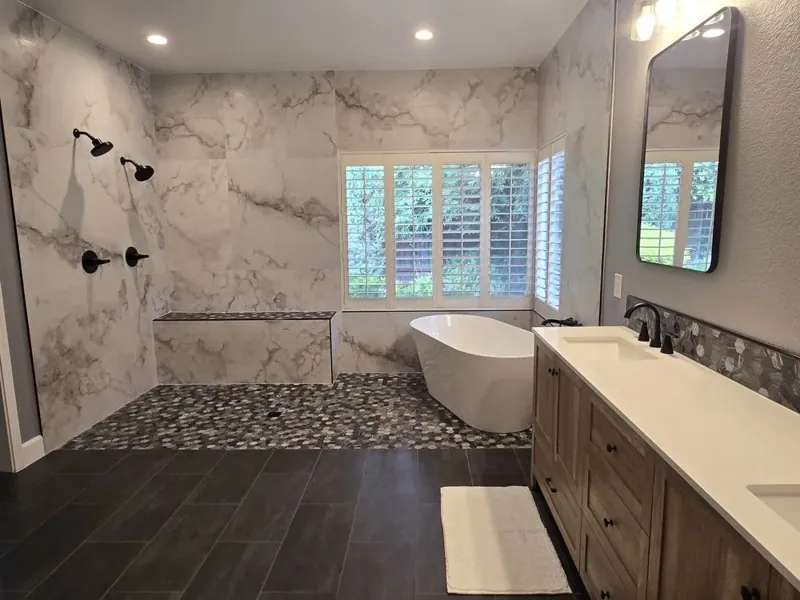
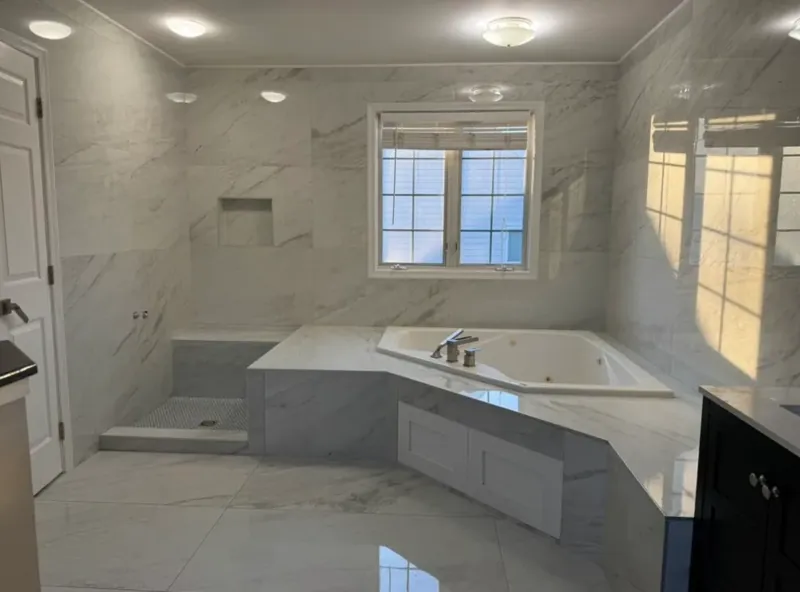
Bathrooms combine frequent moisture, fixtures, penetrations, corners, and changes in plane. We pay close attention to the substrate, waterproofing where relevant, shower-wall and floor details, drain or threshold relationships, niche and curb conditions, and the use of flexible sealant at movement locations. Tile and grout provide the visible finish, but the water-management layer behind or beneath that finish is what helps protect the underlying construction.

Kitchens, entries, and everyday living areas

Kitchen backsplashes and residential floors need different solutions. A backsplash may involve outlets, cabinets, exposed edges, and a visually important starting line, while a floor must handle traffic, furniture, soil, and transitions. We plan cuts and joint lines around the room’s fixed elements, select setting materials for the surface and tile, and address height changes so the new work meets adjacent finishes cleanly.

Aftercare and maintenance tips

Allow the installation to cure according to the setting and grout product instructions before placing furniture, exposing it to water, or beginning routine cleaning. Use a soft, non-abrasive method and a cleaner compatible with the tile, grout, and any stone treatment. Avoid assuming that one cleaner is suitable for every surface: acidic products can damage some stone and cement-based materials, while aggressive scrubbing can affect finishes or joints.

Keep floors free of abrasive grit, wipe spills promptly, and follow the care guidance for the specific tile and grout. Natural stone maintenance varies by species and finish, so sealing should be evaluated rather than automatically repeated on a fixed schedule. Inspect flexible joints and wet-area details periodically; if sealant separates, cracks, or no longer sheds water as intended, address the condition before moisture can reach vulnerable areas. We can explain the practical care considerations for the materials selected for your project.

What shapes your estimate

Residential tile installation is scoped according to the actual conditions and details of the project rather than a generic room rate. Factors include the room’s size and shape, tile format and pattern, substrate condition, demolition or removal needs, surface flattening, underlayment or backer requirements, waterproofing, number of cuts and penetrations, stairs or transitions, trim and edge treatment, grout and sealant choices, access, and the sequence required around cabinets or fixtures.

The tile itself and related finish materials can also vary substantially by product. A clear scope should identify preparation, installation, setting materials, grout, movement joints, waterproofing when relevant, and finish details so decisions are made before work begins. ProCraft Tile Installation can review the space and tile plan to develop a project-specific scope; no responsible estimate should assume that a sound, flat substrate or a simple layout exists without looking at the conditions.

Residential Tile Installation FAQ

Straight answers before the first tile is set.

Can tile and grout make my bathroom or shower waterproof?

No. Tile and grout are finish materials, not a complete waterproofing system. Showers, tub surrounds, and other wet areas may require compatible waterproofing behind or beneath the tile, with careful treatment at seams, corners, penetrations, and transitions. The appropriate method depends on the assembly and the product requirements.

Why does substrate preparation matter for residential tile?

Tile is rigid and reflects problems in the surface below it. Excessive movement, deflection, contamination, or unevenness can contribute to cracked tile, lippage, poor bond, or premature grout problems. Cleaning, repair, flattening, or an appropriate underlayment may be needed before tile is installed.

Do large-format tiles need a different installation approach?

They often require stricter flatness control, careful mortar selection, and attention to coverage and handling. The tile’s size, thickness, back profile, substrate, and room conditions all matter. A larger tile does not make an uneven substrate flat, so preparation and layout should be addressed first.

Should movement joints be filled with grout?

Movement locations should not automatically be filled with rigid grout. Perimeters, changes of plane, transitions, and other specified locations may need a compatible flexible sealant so the joint can accommodate movement. The details depend on the installation and the surrounding materials.

Is natural stone sealed the same way as porcelain tile?

No. Natural stone varies in porosity, finish, staining behavior, and sensitivity to products. Some stone may benefit from a compatible sealer, while other surfaces have different requirements. Sealing does not waterproof the installation, and care should follow the stone and product guidance.

Can adhesive mastic be used for every tile project?

No. Mastic is not a universal adhesive and is not suitable for wet, submerged, or every large-format application. The setting material should be selected for the tile, substrate, exposure, and manufacturer instructions. Cement-based or other system-compatible mortars may be more appropriate depending on the conditions.

Make a good start

Good tile work starts with a conversation.

Tell us about the room, the material, and what you’d like to change.